SABCS: 46 years at the forefront of clinical and translational research in breast cancer—and still growing

Share on facebook
Share on twitter
Share on linkedin
Share on email
Share on print

The 2023 San Antonio Breast Cancer Symposium (SABCS), held Dec. 5-9 at the city’s Henry B. Gonzalez Convention Center, had a record-setting attendance with 10,874 registered attendees from 102 countries.

To access this subscriber-only content please log in or subscribe.

If your institution has a site license, log in with IP-login or register for a sponsored account.*
*Not all site licenses are enrolled in sponsored accounts.

Login Subscribe
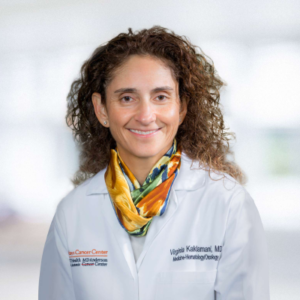
Virginia Kaklamani, MD
Professor of medicine, Department of Hematology/Oncology, UT Health San Antonio; Leader of the Breast Cancer Program, UT Health San Antonio MD Anderson Cancer Center
Srivani Ravoori, PhD
Director of science communications, American Association for Cancer Research
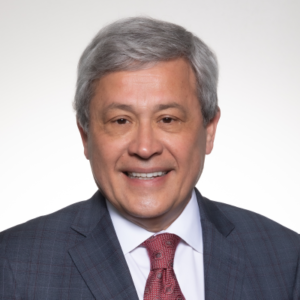
Carlos L. Arteaga, MD
Director, Harold C. Simmons Comprehensive Cancer Center, Associate dean of oncology programs, Lisa K. Simmons Distinguished Chair in Comprehensive Oncology, UT Southwestern Medical Center
Table of Contents

YOU MAY BE INTERESTED IN

Patients with leptomeningeal metastasis have historically had few treatment options. Now, researchers from The University of Texas MD Anderson Cancer Center have found a combination of targeted therapies, tucatinib and trastuzumab, plus the chemotherapy drug, capecitabine, may improve symptoms and extend survival in some breast cancer patients with LM. 
Positive topline results have come out of the randomized phase II FOURLIGHT-1 study evaluating atirmociclib in combination with fulvestrant, versus fulvestrant or everolimus plus exemestane, in people with hormone receptor-positive, human epidermal growth factor receptor 2-negative advanced or metastatic breast cancer who had received prior cyclin-dependent kinase 4/6 inhibitor-based treatment. 
The phase III persevERA Breast Cancer study, evaluating investigational giredestrant in combination with palbociclib for people with oestrogen receptor (ER)-positive, human epidermal growth factor receptor 2 (HER2)-negative, locally advanced or metastatic breast cancer, did not meet its primary objective of a statistically significant improvement in progression-free survival in the intent-to-treat population versus letrozole plus palbociclib, but a numerical improvement was observed. 
Virginia Kaklamani, MD
Professor of medicine, Department of Hematology/Oncology, UT Health San Antonio; Leader of the Breast Cancer Program, UT Health San Antonio MD Anderson Cancer Center
Srivani Ravoori, PhD
Director of science communications, American Association for Cancer Research
Carlos L. Arteaga, MD
Director, Harold C. Simmons Comprehensive Cancer Center, Associate dean of oncology programs, Lisa K. Simmons Distinguished Chair in Comprehensive Oncology, UT Southwestern Medical Center

Never miss an issue!

Get alerts for our award-winning coverage in your inbox.

Login